
The board decides in three weeks. The study takes ten.
A repurchase obligation study tells you what the obligation is. Repurchase Ready shows what happens if you change it.
See what’s coming. Be ready.
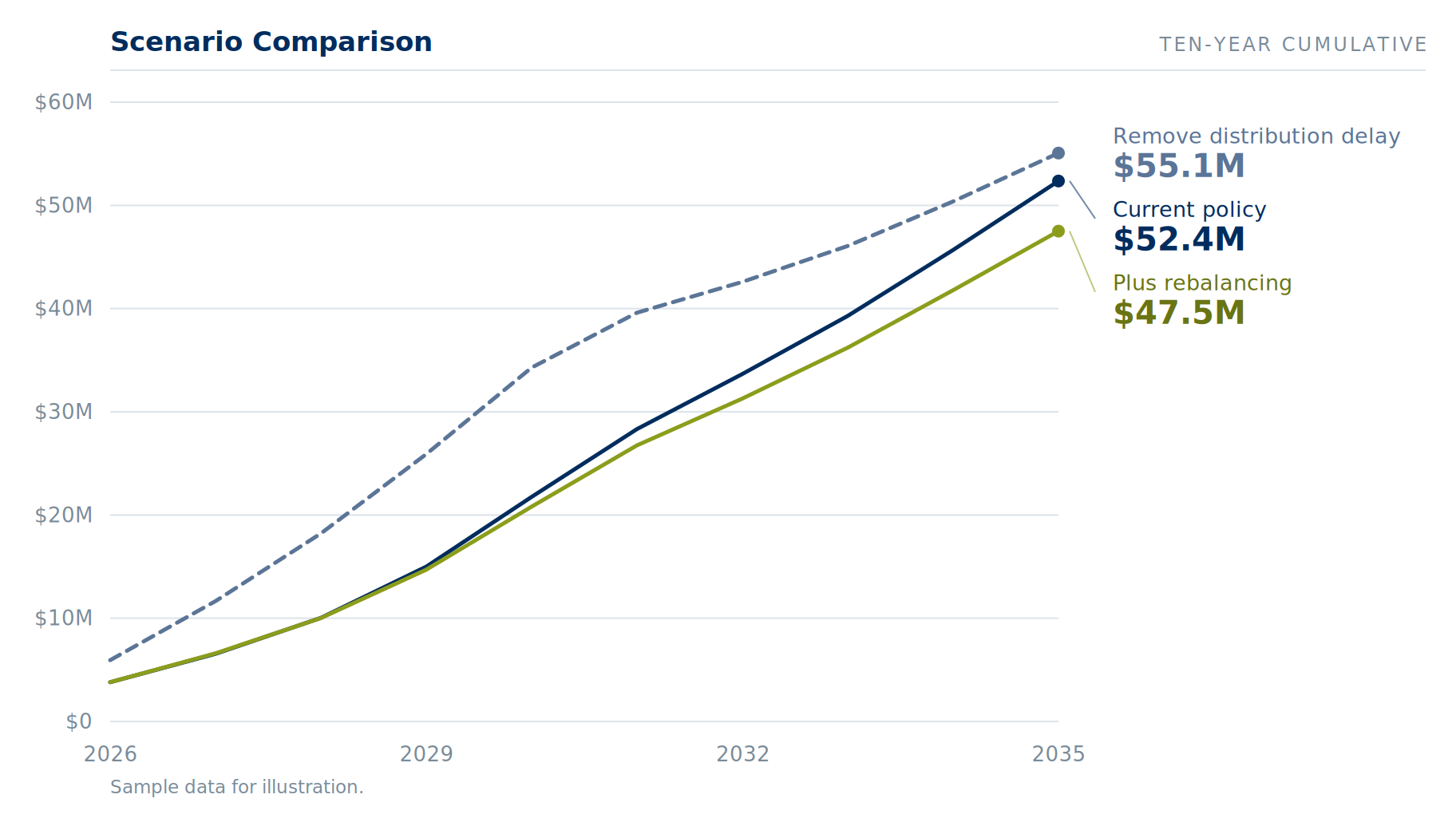
Between studies, the company keeps changing.
A formal repurchase obligation study may project twenty or thirty years out. But the decisions that matter most tend to arrive much sooner — and usually between studies.
A restructuring alters the forecast. An acquisition changes the participant picture. New financing shifts what cash is available. Valuation expectations move.
Model Scenarios.
Compare Outcomes.
Before the Decision is Made
Not a different set of information — a current one, available the moment a decision requires it. Here’s where that matters:
A decision is on the agenda before the next study
The board is weighing a re-leveraging question at next month’s meeting. You model it beforehand and bring the comparison — what happens if you act, what happens if you don’t — rather than reconstructing the analysis afterward.
Something significant is about to happen
An acquisition is on the table. A restructuring is imminent. The existing projection rests on assumptions that no longer hold, and the next formal study is a year out. You update the forecast and know where the company actually stands.
Your lender asks a question an old report can’t answer
The last study identified the repurchase obligation, but repurchase obligations compete for the same dollars needed to support growth, acquisitions, debt service and other strategic priorities. You model alternatives and evaluate those tradeoffs using current information.
A director wants the range, not the estimate
The repurchase obligation has been identified. The question now is how to manage it. You compare potential strategies, evaluate the tradeoffs associated with each approach, and understand the impact before adopting a plan amendment or implementing a corporate decision.
Built from Boardroom Experience
Repurchase Ready was developed after years of working with ESOP boards and management teams. The same challenge kept arising: a repurchase obligation study identified the obligation, but directors still needed to decide what to do about it.
Whether evaluating leverage, distribution policies, benefit levels, or ownership strategy, boards wanted to compare alternatives and understand the consequences before taking action.
Repurchase Ready was built to bring that analysis into the boardroom.
A client would call with a decision in front of them. A board meeting approaching. An acquisition under consideration. A question from a lender. And the most recent repurchase obligation study had been completed a year or two earlier.
The analysis was sound when it was produced. The problem was the business had moved on, and there was no practical way to update it before the decision had to be made.
That gap is what Repurchase Ready closes. Not a replacement for the expertise around you — a way to keep the forecast connected to what’s actually happening in the business, so every one of those conversations starts from better information.
What your board sees.
Scenario comparisons. Multi-year projections. Side-by-side analysis of the options actually in front of you.
The output is built for a board conversation — clear enough that directors who don’t work with the ESOP every day can follow it, detailed enough to support a real decision.
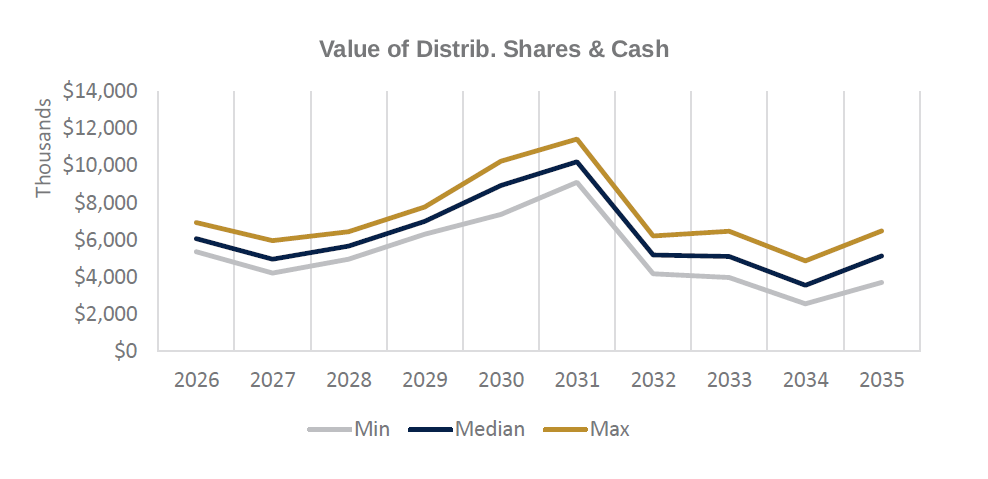
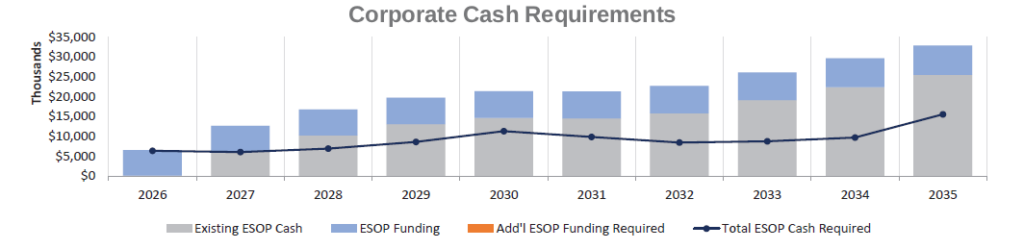
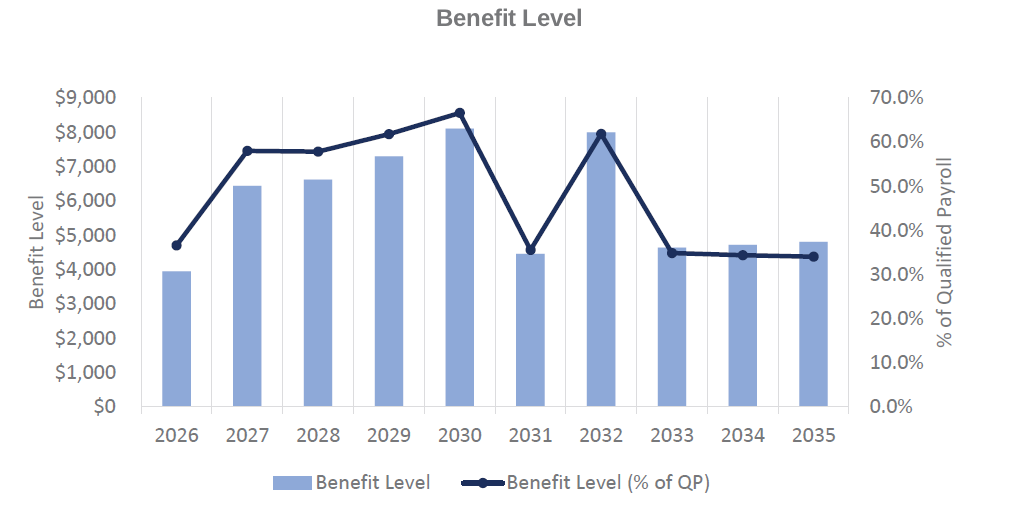
Repurchase Ready provides the information you need and the information you didn’t know you needed, as often as you need it…
— Burak Kasapoglu, COO at MN Builders, Inc.
RO Planning in the Boardroom
One company’s experience.
Every repurchase obligation study answers an important question: What is the projected obligation? This company’s board needs to answer the next question: What are our options? As strategic decisions arose, leadership needed the ability to model alternative approaches, compare projected outcomes, and understand the impact before committing to a path forward.
Repurchase obligation planning cannot be treated as an occasional exercise. It has become part of the company’s ongoing financial and strategic planning.
— CFO, mature ESOP company
Getting Started
What it takes on your side.
The information Repurchase Ready needs already exists in your files: your census, your plan provisions, your company data. Getting set up means providing what your TPA and advisors already produce — not building something new.
After that, an annual census and current year values update keeps the forecast current. Running a new scenario when a question arises takes considerably less than commissioning a new study.
You run your desired scenarios yourself, or with assistance from our consultants. Each scenario offers the option to use Monte Carlo simulation to model the randomness in participant behavior across hundreds of iterations — so the output is a range of outcomes with the drivers visible, not a single projection resting on one set of assumptions.
